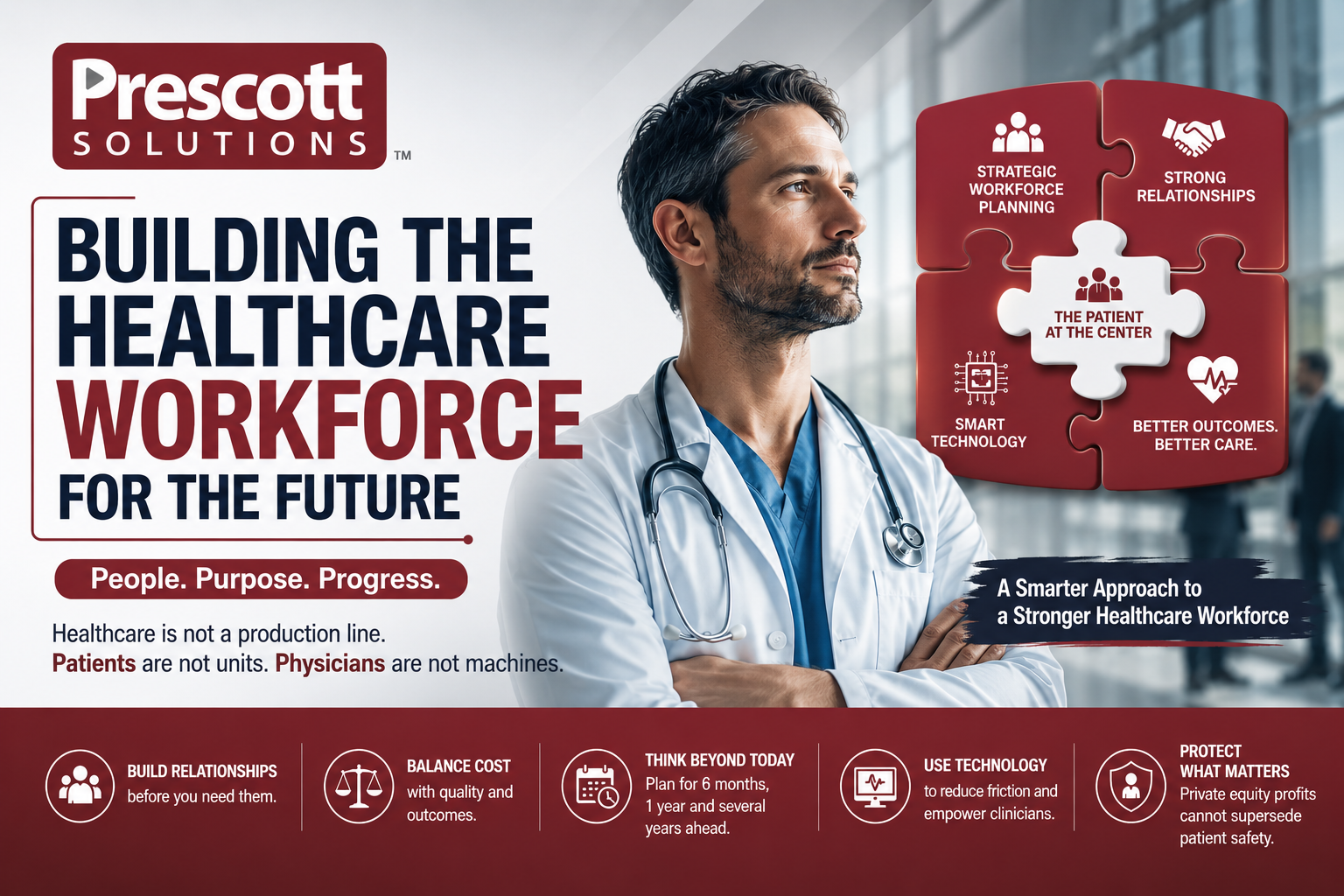
The Radiologist Shortage Isn't Going Away. Here's What Smart Practices Are Doing About It.
The radiology workforce is undergoing a structural shift, with growing shortages, rising attrition, increasing imaging volumes, and intense competition for subspecialists such as breast, body, and pediatric radiologists. As practices consolidate and radiologists increasingly prioritize flexibility, autonomy, and long-term fit, traditional “post and wait” recruiting strategies are no longer enough.

I've spent nearly two decades finding elite healthcare talent for practices that couldn't afford to get a hire wrong. In that time, I've watched the job market swing from feast to famine and back again. But what's happening right now is different. This isn't a cycle. It's a structural shift — and if you're leading a radiology practice, understanding it is the difference between building a durable team and constantly patching holes.
Let's look at what the data actually says, and what it means for how you recruit.
The Numbers Tell a Clear Story
For three years running, radiology workforce shortages have topped AuntMinnie.com's list of the biggest threats facing the field, with rising imaging volumes close behind. That's not a coincidence — it's supply and demand playing out in real time, and it's putting real strain on practice leaders trying to keep their departments staffed and their patients seen.
A few data points worth sitting with:
National projections point to a shortage of roughly 141,000 full-time physicians by 2028, with radiology sitting slightly better positioned than the physician workforce overall — but still short.
Radiologist attrition has more than doubled over the past decade, climbing from about 1% annually to 2.5%. This trend predates the pandemic; COVID accelerated it, but it didn't create it.
Subspecialists — the breast imagers, body imagers, and pediatric radiologists practices most want to hire — are roughly a third more likely to leave the workforce than generalists.
Pediatric radiology has seen an outright decline in practicing subspecialists, even as the overall radiologist workforce has grown.
And on the hiring side: breast and body imaging consistently rank as the top recruiting needs across practice types, year after year. If you've been trying to fill one of these roles and it's taken longer than it used to, you're not imagining it. You're competing for a shrinking pool of exactly the people everyone else wants too.
Why Bigger Isn't Automatically Better
One trend I watch closely is consolidation. Radiology-only practices have shrunk by nearly a third over the past decade, while multispecialty groups have grown. Average practice size has nearly doubled. On paper, that sounds like efficiency. In practice, it's changing what radiologists want out of a job — and it's changing who's still in the workforce five years from now.
Here's the pattern that should concern every practice leader: when a smaller radiology practice gets absorbed into a larger system, the radiologists who land there are more likely to end up practicing as subspecialists. And subspecialists are the group most likely to burn out and leave. Practices are, in effect, recruiting into a structure that increases their own future attrition risk — without always realizing it.
This is exactly why the "just post the job and wait" approach doesn't work anymore. Filling a seat isn't the goal. Filling it with someone who will actually stay is.
Stop Trying to Peg Every Radiologist Into the Same Hole
Here's something almost twenty years in this business has taught me: radiologists are detailed, discerning experts, and they can smell a generic pitch from a mile away. If your recruiting process treats a breast imager fresh out of fellowship the same way it treats a body imager who's fifteen years into their career and burned out on call, you've already lost them both.
Too many practices still recruit like it's 2005 — one job posting, one boilerplate offer letter, one "take it or leave it" conversation. And then they wonder why the candidate who accepted is gone in fourteen months.
The practices actually winning right now do the opposite. They personalize the radiologist experience from the first conversation. They ask what a candidate actually wants — not what the practice assumes every radiologist wants. Some want a four-day week and no weekend call. Some want a partnership track and a say in how the reading room runs. Some want to build a subspecialty program from scratch. None of that shows up on a standard job description, and none of it gets uncovered by a recruiter who's optimizing for speed over fit.
Radiologists respond to people who understand the specifics of their work the way they understand the specifics of a study. Vague promises about "great culture" and "competitive compensation" don't land with an audience trained to notice when something's imprecise. Detail is the currency that earns trust with this group — and trust is what gets a signed contract instead of a declined offer.
What This Means If You're Trying to Hire
The practices I work with who are winning in this market aren't necessarily offering the highest salary. They're doing three things differently:
They're recruiting for fit, not just credentials. A strong CV doesn't tell you whether a radiologist wants a rural practice with call coverage or a metro academic setting with research time. Getting that wrong is how you end up rehiring the same seat in eighteen months.
They're taking flexibility seriously — without over-promising it. A large majority of radiologists now telework or want to, and this isn't a perk anymore — it's a baseline expectation, especially for early- and mid-career candidates who have options. But flexibility that isn't backed by a stable, well-structured practice is just a trap with better marketing. Radiologists have gotten wise to that, and many are actively moving away from larger corporate staffing models toward smaller, stable groups with a direct hospital relationship, precisely because they want flexibility without being run into the ground.
They're thinking about retention before day one. The data shows early-career radiologists are actually the most likely to stay put long-term — if the first placement is right. That's not luck. That's a recruiting process built around the whole person, not just the resume.
Where Prescott Solutions Comes In
This is the work I do. Nearly twenty years of building relationships across the radiology community means I'm not starting from a job board when a practice calls me — I'm starting from a network of people I know, whose careers I understand, and whose next move I can often anticipate before they've fully decided to make it.
In a market this tight, that relationship-driven approach isn't a nice-to-have. It's the only thing that actually moves the needle. It's also what results are made of: radiologists we placed helped a large Midwest health system eliminate a backlog of more than 90,000 exams — not by throwing bodies at the problem, but by placing the right subspecialists into the right roles with a structure that let them actually work at capacity.
That's the difference between filling a seat and solving a problem.
If your practice is feeling the squeeze — whether it's an open breast imaging seat that's been sitting too long, or a broader concern about who's walking out the door next — let's talk. I'd rather help you build a pipeline before you're in crisis than help you scramble once you are.
How can we help you? Strengthen your own radiology services by utilizing ours.
Reach out to Prescott Solutions and let's build a recruiting strategy that actually holds up.
Portia Prescott is the founder of Prescott Solutions, a boutique HR and recruiting firm specializing in placing elite radiology talent with practices across the country.
References:
Dibble EH, et al. "The 2021 ACR/RBMA Workforce Survey: Practice Types, Employment Trends, and Hiring Needs." Journal of the American College of Radiology, 2023. jacr.org
"Radiologist Recruiting Remains Robust." AuntMinnie.com. auntminnie.com
"The Radiologist Shortage: A Workforce Update from HPI." ACR Bulletin, Research Rounds. acr.org
"New Studies Shed Light on the Future Radiologist Workforce Shortage." Harvey L. Neiman Health Policy Institute. neimanhpi.org